Visa and entry rules change — always verify current requirements. Visa, permit, and entry requirements are set by the relevant government and can change without much notice. The information here is a general starting point, not official guidance. Please confirm current requirements with the official embassy, consulate, or e-visa portal for your destination before you travel — we're also happy to help you check this as part of planning your trip with us.
Weather and seasonal patterns can shift. Seasonal guidance here reflects general, publicly available climate patterns — not a forecast for your specific travel dates. Please check an official, current weather forecast closer to your trip before finalising plans.
New Zealand is the destination a lot of Indian travellers describe as "someday." It's far, it's not cheap, and the idea of arranging a visa, a road trip and a full day of flying can feel like more than a holiday should ask of you. So people put it off, and then a friend comes back with photographs of Milford Sound and the question comes up again.
If New Zealand would be your first long-haul trip, this guide is for you. We'll cover what the journey is really like, the visa, when to go, how many days it deserves, how much driving to expect, and where people tend to over-plan. We'll mention our own route only at the end, because the first job is helping you decide whether and how to go.
What "long-haul" actually means here
The distance is the first thing to understand. There's no direct, short way to New Zealand from India; most itineraries involve at least one connection, often through a hub in Southeast Asia or the Gulf, and the total travel time can easily stretch to a full day or more door to door. That changes how you should plan the start and end of the trip. Land with a day of buffer, not a jam-packed first afternoon, and avoid scheduling anything important the day after you get home.
There's also the time difference. During the New Zealand summer, when the country is on daylight saving time, it's about seven and a half hours ahead of India. That sounds manageable, but jet lag from a long eastward journey catches many first-timers off guard. The simplest advice is to sleep well on the flight if you can, get outside in daylight on day one, and keep your first day's plans light.
The visa: what's required and when to apply
Indian citizens need a visitor visa to travel to New Zealand. There's no visa-free entry. Applications are made through Immigration New Zealand, and the official site states that from 1 October 2026 applications for this visa must be made online.
According to Immigration New Zealand's visitor visa page, you need to show you have at least NZ$1,000 a month for your stay, or NZ$400 a month if your accommodation is already paid for. You also need to show that you plan to leave at the end of your trip, which usually means an onward or return ticket, or proof that you have the funds to buy one. A visitor visa allows a stay of up to nine months in an 18-month period, which is far longer than almost any holiday needs. The fee is shown as starting from NZ$441, and the site indicates that around 80 percent of applications are processed within two weeks, with the busiest period running from September to March.
That last detail matters a great deal for planning. The busiest processing months overlap with the most popular travel season, December to February. If you're travelling then, don't leave the application until a month before. Apply early, with your documents organised, and don't buy non-refundable flights until you've considered the risk that a visa decision takes longer than expected. These are the published figures, and they can change, so please check the official site for current fees and timings. We also help our travellers with visa assistance as part of our packages.
When to go
New Zealand's seasons are reversed, so summer runs from December to February. This is the most popular window for Indian travellers, since it lines up with school holidays and offers the longest daylight and the most settled weather, especially in the South Island. It's also the busiest and most expensive period, so book accommodation and activities early.
The shoulder months, March and April or late October and November, can be quieter and often better value, with pleasant weather and fewer crowds. Winter, from June to August, brings snow to the mountains and is a great time if skiing is the reason you're going, but the days are short and some scenic roads and activities can be affected by weather.
One practical point for summer travellers: the sun in New Zealand is strong, and many visitors underestimate it on a cool day. Sunscreen, a hat and sunglasses aren't optional extras.
How many days is enough?
Because of the flight time, most travellers plan eight to ten days or more rather than a quick five-day trip. A short stay means you spend a disproportionate share of your holiday in transit and recovering. A longer trip lets you slow down. A useful way to think about it is that the first and last days are mostly about travelling, so a nine-day trip really gives you about seven days on the ground.
It's also tempting to include both islands. Unless you have two weeks or more, we'd suggest focusing on one. The South Island concentrates a lot of what people dream about, including Queenstown, Lake Tekapo, the Mount Cook region and Fiordland, in a compact area. Trying to cover both islands in nine days usually means a lot of driving and not much time to stand still.
Driving: easier than you think, with a few caveats
Here's good news for Indian travellers: New Zealand drives on the left, just as India does, so the basic orientation is familiar. Self-drive is popular with couples and small families who are comfortable behind the wheel, and it offers real freedom to stop at lakes and viewpoints.
There are things to prepare for. Roads in mountainous areas can be winding, weather can change quickly, and distances between towns can be longer than they look on a map. Licence rules for overseas visitors have specific conditions, such as whether your licence is in English or needs a translation, so check the New Zealand Transport Agency's guidance before you plan to drive. And if you'd rather not drive on unfamiliar roads, private transfers and guided routes are a perfectly comfortable alternative, and they let everyone enjoy the scenery.
Allow for road conditions in Fiordland in particular. The road to Milford Sound is spectacular, but it can be affected by weather, and closures are a real possibility. Build a little slack into the days around any Milford visit.
The big three: what most people actually want to see
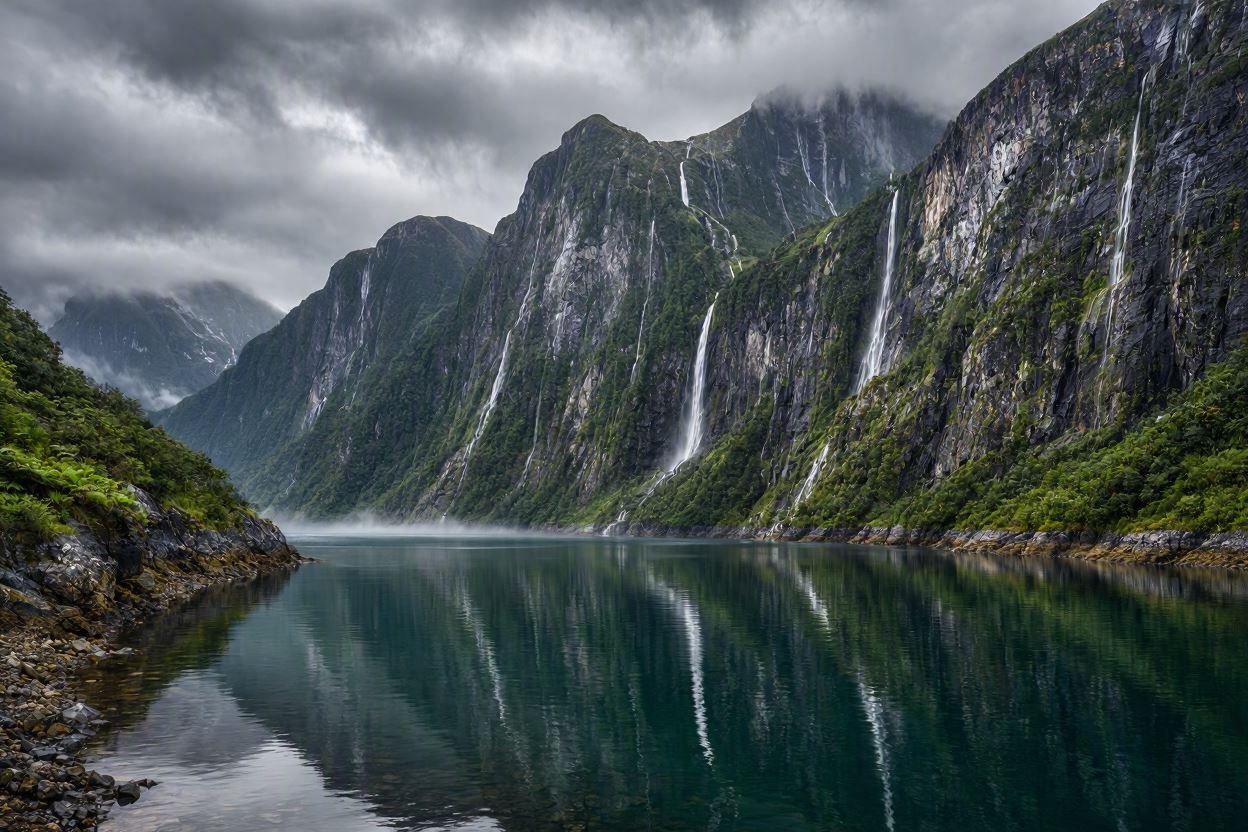
Most first-time visitors to the South Island want some combination of three experiences. The first is Milford Sound, in Fiordland National Park, a cruise among steep cliffs and waterfalls. It's very popular, and it's weather dependent, so the experience can differ from day to day, from misty and moody to bright and clear. The second is Queenstown, the adventure hub, with options from gentle gondola rides and lake cruises to bungee jumping and jet boating. You can enjoy Queenstown without doing a single adrenaline activity, and it's fine to skip them. The third is the Lake Tekapo and Mount Cook region, known for turquoise glacial water and big skies.
If you only have time for a few things, build your plan around these and leave space between them.
Money: being realistic
New Zealand isn't a budget destination for Indian travellers. Flights, accommodation, activities and car hire can add up quickly, and the exchange rate doesn't do you any favours. We won't give you made-up cost figures, but we'll say this: decide on a total budget first, then choose which two or three experiences matter most and spend on those, rather than trying to do everything. Many of the best things, such as lakeside walks, viewpoints and scenic drives, cost very little.
Also budget for the extras that surprise first-timers: travel insurance, data and local SIM costs, meals, parking and activity bookings.
Food: vegetarian and Jain travellers
New Zealand has a strong café culture and a growing number of vegetarian options, and larger towns have Indian restaurants. That said, smaller towns and scenic stops can have limited choices, and "vegetarian" doesn't always mean what you'd expect, since stock or animal-derived ingredients can be used in soups or sauces. If you eat Jain food, plan ahead. We have a general guide to this, Jain and vegetarian food abroad: what to actually expect, that's worth reading before you go.
Making the flight easier
If this is your first very long journey, a few small habits make a real difference. Choose a connection with enough time between flights so a short delay doesn't cost you the second leg. Carry essentials, medication and a change of clothes in your cabin bag. Drink water, move around when you can, and set your watch to New Zealand time when you board so your body starts adjusting early. If you're travelling with elderly parents or children, tell the airline about any special needs in advance.
Please speak to your doctor before a very long journey if you have any health condition, are pregnant, or have concerns about long flights, since that's advice we can't give.
What a well-paced week actually feels like
It helps to picture the rhythm rather than the list. You arrive tired, and the first day is for a walk, a meal and sleep. A day in the city lets you adjust. Then you move to the mountains, where the pace slows. A big day, like the Milford Sound excursion, is followed by a lighter one, and an adventure day is optional, not compulsory. Towards the end you drive through some of the most dramatic scenery of the trip, with time to stop. The last day is for packing and the airport, not for squeezing in one more attraction.
That rhythm, with space between the big days, is what separates a trip people remember fondly from one they describe as tiring. It's also why we'd gently argue against adding more cities and activities than the days can hold.
Mistakes first-timers make
Trying to cover too much, especially both islands in a short trip. Leaving the visa too late. Not allowing recovery time after the flight. Booking the Milford Sound cruise for the last day with no buffer for weather. Underestimating driving distances. And forgetting that daylight and weather change what's practical on a given day.
How we approach New Zealand
New Zealand is one of our most requested long-haul destinations, and we build the itineraries around exactly this pacing. Our New Zealand Fjords Adventure is a nine-day, eight-night South Island route that begins in Auckland and takes in Queenstown, a Milford Sound cruise, and a scenic drive through the Lake Tekapo and Mount Cook region. It includes return flights, hotel stays, daily breakfast, visa assistance, local transfers and travel insurance, and we've identified vegetarian and Jain-friendly dining options along the route. Optional adventure activities are extra, so you choose how much or how little to take on.
If you're still deciding whether New Zealand is the right first long-haul trip, we're happy to talk it through. Message us on WhatsApp or through the contact form with your rough dates and budget, and we'll tell you honestly what works.
Sources & credits