Weather and seasonal patterns can shift. Seasonal guidance here reflects general, publicly available climate patterns — not a forecast for your specific travel dates. Please check an official, current weather forecast closer to your trip before finalising plans.
We've written this to help you plan a trip you'll genuinely love — not as professional guidance beyond travel planning. For anything outside travel planning — safety, technique, weather, or specialist advice — please lean on the right expert for it: a certified guide, a local authority, whoever fits best. When it comes to actually planning your trip, though, we're always just a message away — contact form, WhatsApp, call, or email — and we'd love to help you get there.
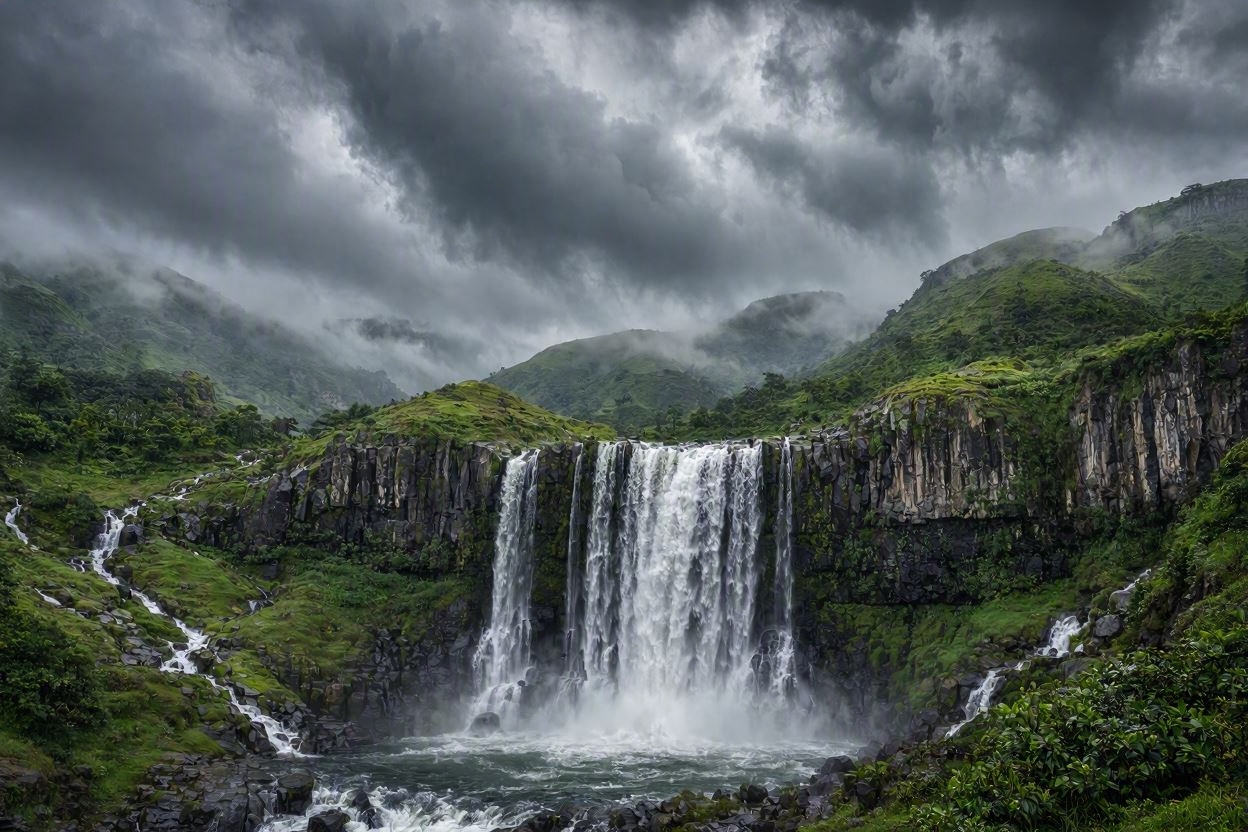
There's a particular week every year when the Western Ghats change their mind. One day the hills around Mumbai and Pune are dry and brown, and then the first proper rains arrive, and within days everything is green, waterfalls appear on slopes that were bare, and weekend plans fill every group chat.
Maharashtra's monsoon is one of the easiest, most affordable trips you can plan: no visa, no flights, and usually no long advance booking. It's also one of the easiest to get wrong, because the same rain that makes the scenery spectacular makes roads slippery, closes viewpoints and, every year, puts people in danger at waterfalls and dams. So this guide covers both: where to go and what each place is good for, and how to keep the trip fun and safe.
What monsoon trips are actually good for
A monsoon getaway is not a sightseeing tour. Think of it as a mood: mist rolling over ghat roads, a hot cup of chai and a plate of bhajiya while rain hammers the roof, waterfalls you can see from the car, and slow mornings with nothing planned. If you go expecting a packed itinerary and clear views, you may be disappointed. If you go expecting weather to be the main attraction, you'll usually have a great time.
Most of these places are a few hours from Mumbai or Pune, which makes them realistic weekend trips. That's their biggest advantage, and also the reason weekends can be crowded and traffic-heavy. If you can, go midweek.
Lonavala and Khandala
The classic first stop for Mumbai and Pune. The area is known for its hills, waterfalls and viewpoints, and its famous chikki. It's easy to reach, has a wide range of places to stay, and is a good choice if you want a relaxed weekend with minimal planning.
The honest downside is crowds. On rainy weekends the roads and popular spots can be extremely busy, and this is also where a lot of the monsoon safety problems arise, because so many people congregate around dams and waterfalls. Authorities often restrict access to certain spots during heavy rain, and those restrictions exist for good reasons. Please follow them.
Mahabaleshwar and Panchgani
Higher and cooler, and known for heavy rain. Mahabaleshwar is among the places people think of for a true monsoon experience, with mist, wet forests and valley views when the cloud lifts. It's also a longer drive from Mumbai than Lonavala, so it suits a two-night stay better than a rushed one-nighter.
Heavy rain can mean limited visibility and some viewpoints may be closed or simply fogged out. Treat that as part of the experience, and have a plan for indoor time, such as a good café, a book or a card game.
Bhandardara
Quieter and more nature-focused, around the Arthur Lake and the Sahyadri hills, with waterfalls fed by the rain and a calmer pace than the better-known hill stations. It's a good option if you'd like greenery without crowds, and it's close to Kalsubai, Maharashtra's highest peak. If you're thinking of trekking there in monsoon, please read our Kalsubai trek guide first, because the rocks get slippery and visibility can be poor, and we'd suggest the cooler, clearer months for the climb itself.
Igatpuri and the Nashik side
A good fit for people travelling from Mumbai or Nashik who want misty hills, with a quieter feel than Lonavala. Like the others, it's best treated as a slow weekend and not a checklist.
Matheran
Matheran is a car-free hill station, where you park and continue on foot, by horse or in a hand-pulled cart. It's lovely in the rain but needs more planning: access can depend on road and train conditions, and some services may be affected by the weather, so check what's running before you travel. It's also not ideal if anyone in your group has mobility difficulties.
Kaas Plateau (seasonal)
If your interest is wildflowers, the Kaas Plateau near Satara is known for its wildflower season, which usually falls somewhere between August and October and varies from year to year with the rain. Access to the plateau is typically regulated, with limits on visitors, so check booking and timing requirements in advance and don't plan on turning up unannounced.
Choosing by who's travelling
With young children, pick a place with a proper hotel, easy access and indoor options, and keep well away from water edges. Fenced, supervised spots are the right choice, and a short drive matters more than a famous name.
With older parents, prioritise comfort: shorter drives, ground-floor or lift-access rooms, no long walks on wet rocks, and a flexible schedule. A resort with views from the window can be a better monsoon trip for them than a sightseeing circuit.
For couples, the quieter places, such as Bhandardara or a calmer corner of the hills, tend to feel more relaxed than the busiest weekend spots.
For friend groups, the usual weekend favourites work well, but agree on safety rules before you leave, especially about water and driving, because group enthusiasm is when risks get taken.
A sensible two-day rhythm
A good monsoon weekend is deliberately unambitious. Leave early on the first day, before the traffic builds, and aim to arrive by lunch. Spend the afternoon on one thing, such as a viewpoint, a short walk in the drizzle or a nearby waterfall that is open and safely accessible. Evenings are for food, chai and conversation. On the second day, have a slow morning, check out late if the hotel allows, and leave before the rush back, or stay until the evening and accept the traffic with good snacks in the car.
The trap is trying to do five viewpoints in one day. In monsoon, you'll spend most of the day in the car and see mostly fog.
Traffic and timing
Weekend traffic on routes towards the popular hill stations can be severe, and rain makes it worse. If you can travel on a weekday, you'll often have the same places with a fraction of the crowds. If not, leaving very early on Saturday and returning late on Sunday, or even Monday morning, helps. Always leave extra time, and remember that a breakdown or a blocked road in the ghats can add hours.
When the rain is just too much
Sometimes the forecast turns out worse than expected. Have a fallback plan: a hotel with enough to do indoors, a flexible booking, or the willingness to head home early. There's no shame in cancelling a trip because an official warning has been issued. The hills will still be green next weekend.
Travelling gently
Monsoon trails and viewpoints take a lot of footfall. Carry your waste back with you, avoid plastic where you can, don't play loud music at quiet spots, and respect local residents and shopkeepers, who are often managing floods and landslides as well as tourists. A short trip that leaves a place no worse than you found it is the kind we'd like to see more of.
Safety: the part to read twice
Every monsoon, there are reports of people being swept away at waterfalls, dams and rivers, and of accidents on slippery rocks and ghat roads. These tragedies mostly happen to people who thought the water looked harmless. A few firm rules apply.
Don't swim or wade in fast-flowing or rising water, however shallow it looks. Water levels upstream can rise quickly, with no warning where you're standing.
Stay behind barriers and follow local signs and police instructions, including temporary closures.
Keep away from edges, cliffs and wet rocks, especially when taking photos. No photograph is worth it.
Check the weather before you leave and during the trip. The India Meteorological Department issues colour-coded alerts, and a red or orange alert for your area is a good reason to postpone.
Avoid driving ghat roads at night or in heavy rain, and allow extra time. Landslides and fallen debris can block roads.
If you're not an experienced driver on hill roads, consider hiring a driver.
Tell someone where you're going and when you'll be back.
Practical planning
Book a day or two flexible if you can, and prefer places with free or cheap cancellation. Pack a proper raincoat, not just an umbrella, along with quick-drying clothes, non-slip footwear, a power bank and a waterproof cover for your phone and bag. Carry a change of clothes in the car. Keep valuables dry and don't rely on a single phone for navigation, since signal can drop in the hills.
A note on booking and cancellation
Because weather can change plans at short notice, read the cancellation terms before you pay. Hotels and homestays vary a lot in how they handle weather-related changes, and some will happily reschedule while others won't. A slightly higher price for a flexible booking is often worth it in monsoon, since the worst case is a trip you can't take safely.
A short monsoon packing list
A real raincoat or poncho rather than a fashion umbrella, which tends to turn inside out on a windy ridge. Footwear with a proper grip, because wet stone and mud are slippery, plus a spare pair so you're not wearing damp shoes on day two. Quick-drying clothes, since cotton jeans stay wet for hours. A waterproof pouch for your phone, documents and wallet. A power bank, because you'll use your phone for photos and maps. A small towel, a basic first-aid kit and any regular medication in your hand luggage. And a few plastic bags for wet clothes, which will save the rest of your bag from becoming damp.
Food: vegetarian and Jain travellers
Rainy-day Maharashtra is a happy place for vegetarians: hot corn on the cob, bhajiya, vada pav, misal, chikki and endless chai. If you eat Jain food, remember that many snack stalls use onion and garlic, so ask before ordering, and at more established restaurants and resorts you can usually request a Jain preparation in advance.
Who these trips suit, and who should reconsider
Monsoon getaways suit families with older children, couples, and friends looking for a short break. They're less suitable for anyone with mobility challenges, very young children (because of slippery paths and water hazards), or people who need predictable, clear-weather sightseeing. If that last one is you, the post-monsoon months, October and November, tend to give you the green hills with clearer skies.
Do you need an agent for this?
Honestly, for many of these places, no. They're easy to plan on your own. Where we can help is if you want something arranged for a group, such as transport, stays and meals, or if you'd like honest advice on which spot suits the people you're travelling with. We don't have a ready-made monsoon package for these hill stations, but our Kalsubai trek is a two-day, one-night option with 100% vegetarian meals and Jain options on request, best done in the clearer season: Kalsubai Peak Trek.
If you're weighing a few options, message us on WhatsApp or through the contact form and tell us who's going and how many days you have, and we'll tell you honestly which place fits.
Sources & credits