Not a substitute for a certified guide. Trail conditions, altitude, weather, and fitness needs can change quickly and vary person to person. This article shares general, publicly available guidance to help you prepare — it isn't a safety assessment for your specific trip. Please trek with a certified local guide, check current conditions before you go, and make your own judgment call about fitness and readiness.
Weather and seasonal patterns can shift. Seasonal guidance here reflects general, publicly available climate patterns — not a forecast for your specific travel dates. Please check an official, current weather forecast closer to your trip before finalising plans.
Kalsubai is the trek that turns people into trekkers. Every year thousands of first-timers from Mumbai, Pune and Nashik drive out to the Sahyadri hills, climb Maharashtra's highest peak in the dark, and watch the sun come up over a sea of cloud. Many of them come back hooked.
It's also a trek that people underestimate precisely because it's so popular. So this guide is written for someone who has never done it. We'll cover how hard it really is, the best time to go, how the climb works, what to pack, how to prepare, the safety points that matter, and who might want to think twice. Then, only at the end, how we run it.
What Kalsubai is
Kalsubai stands at roughly 1,646 metres, about 5,400 feet, in the Sahyadri range near Bhandardara in Maharashtra. It's the highest point in the state, and the trailhead village of Bari is the usual starting point. A small temple dedicated to the goddess Kalsubai sits at the summit, and the climb is popular with both trekkers and devotees, particularly during certain festival periods when the trail can become very crowded.
How hard is it, really?
Kalsubai is usually described as easy to moderate. The trail isn't technical, and you don't need prior trekking experience. But it's a sustained, steady climb of a few hours, and the upper section includes iron ladders bolted into the rock face. If you're reasonably fit and comfortable on a secured ladder at height, most people manage it.
A few honest points. It's not a stroll. People who rarely exercise find the continuous ascent tiring, and the descent is hard on knees and toes. The ladders are manageable but can be intimidating if you're afraid of heights, particularly when queues form and you're waiting on a rung. And conditions change everything: the same trail that's easy on a dry, cool morning can feel serious on wet rock or in the dark.
Best time to go
October to February is the sweet spot: clear skies, cooler temperatures and the best chance of a spectacular sunrise. Early winter mornings can be properly cold at the summit, so carry a layer.
The monsoon, roughly June to September, turns the hills green and dramatic with waterfalls and low cloud, and that has its own appeal. But rocks get slippery, visibility at the top is a gamble, the ladders are wetter, and crowds on weekends can be heavy. We'd suggest treating monsoon as a trek for experienced people with a guide, not a first-timer's choice.
Peak summer, March to May, is best avoided. The exposed sections get hot with little shade, and starting before dawn only partly solves the problem.
The usual plan: a night start for sunrise
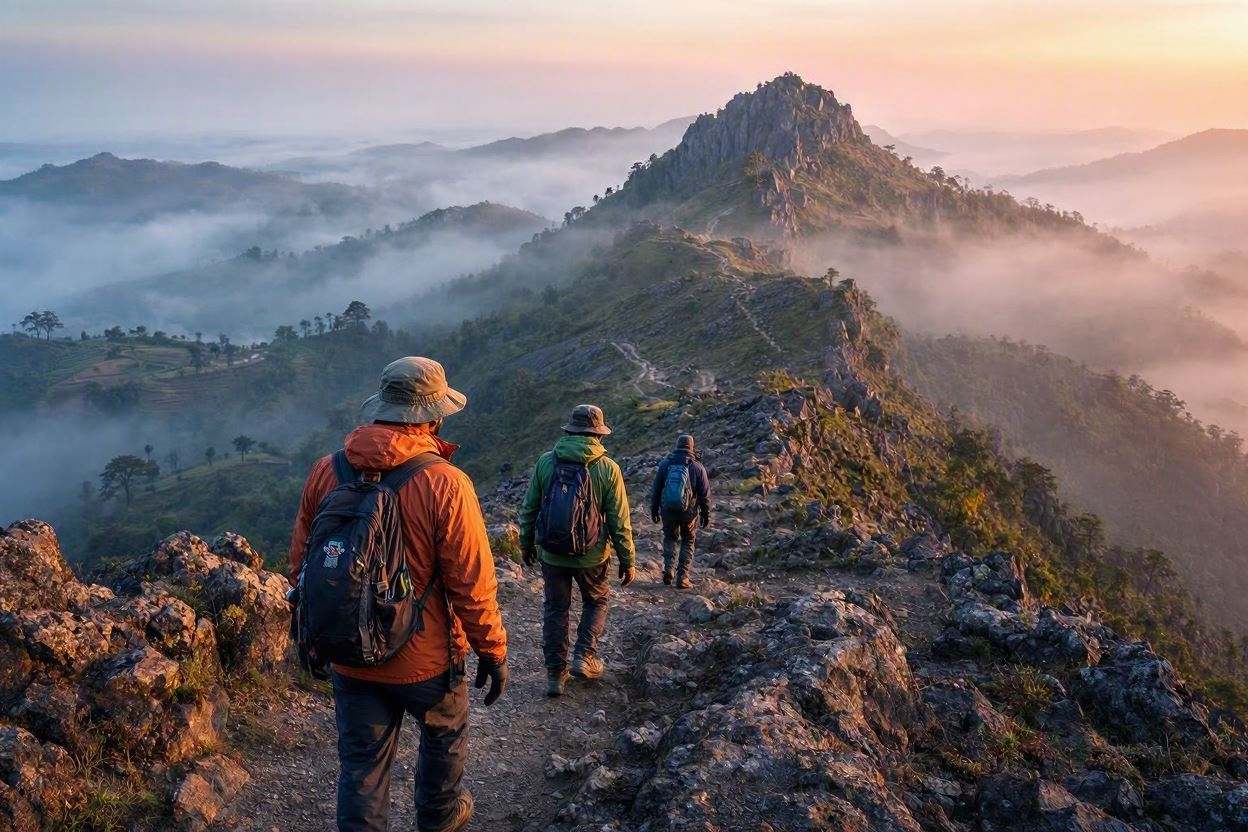
Most groups do Kalsubai as an overnight trip. You reach Bari village in the evening, have dinner and rest, then start the climb in the early hours of the morning, so you reach the summit around sunrise. You descend by late morning or early afternoon and head home.
The night start has real advantages, including cooler temperatures and the sunrise. It also has real risks: you're climbing in the dark, on a trail you don't know, often alongside many other groups. A headlamp, a guide who knows the route, and a steady pace matter much more than speed. If you'd rather climb in daylight, that's a perfectly good option, and you'll see the landscape you're walking through.
Preparing your body
You don't need to train like an athlete, but a few weeks of preparation make a real difference. Walk briskly or climb stairs regularly, ideally with a light backpack. Build up leg strength with squats and lunges. If you're not used to long walks, do a couple of hill or stair sessions beforehand. And if you have any medical condition, such as heart, breathing, joint or blood-pressure issues, please check with your doctor before you go. We can't assess that for you.
What to pack
Keep it light, because this is a short trip, not an expedition. Sturdy trekking or running shoes with real grip, not sandals or flip-flops. A headlamp, plus a backup torch on your phone. At least two litres of water, ideally in a sturdy bottle. A light jacket or windcheater for the summit wind. Quick energy food, such as dates, nuts, chikki and glucose biscuits. A small first-aid kit with basics and any personal medication. A cap or hat, and sunscreen for the descent. Plastic bags for wet items and for carrying your waste back. And a power bank.
Leave the heavy backpack, the fashion sneakers and the speaker at home.
Safety points that matter
Trek with a guide who knows the route, especially at night. Stay on the marked path. On the ladders, take your time, keep three points of contact where possible, and don't overtake dangerously or stand in the way of other trekkers. Don't push on if you feel dizzy, unwell or unsafe. Descend carefully, because most minor injuries happen on the way down. Keep your group together, and agree a turning-back time before you start.
Check the weather before you go and avoid trekking in heavy rain or thunderstorm conditions. Carry your own water, and don't rely on finding any on the trail. Tell someone where you're going and when you expect to be back. And please remember this is general, publicly available guidance and not a safety assessment for your particular group or day. Conditions can change quickly.
Who might want to reconsider
Anyone with a fear of heights who can't manage ladders. People with significant knee, back, heart or breathing problems unless their doctor says it's fine. Very young children, or older relatives, unless they're used to long walks and the trip is paced for them. And anyone planning to trek in heavy rain without experience.
None of this is a reason to feel excluded. There are gentler hills and viewpoints in the same area, and Bhandardara itself is a lovely, quiet place to stay without climbing anything.
What a typical night looks like
Here's the rhythm of a standard overnight trip, so nothing about it is a surprise. You travel to Bari village in the afternoon or evening, check in, have dinner and a short briefing from your guide. You try to sleep for a few hours, though many people don't manage much. Around the early hours of the morning, you wake, drink something warm, put on your headlamp and start walking. The first stretch is a steady climb through farmland and rocky trail. As the sky lightens you reach the ladder sections, and then the summit, where you wait for the sun. After sunrise and some photographs, you descend, usually back at the village by late morning, then have breakfast and travel home.
Because of the early start and the travel, you'll be tired. Don't plan anything demanding for the rest of that day, and avoid driving yourself home if you're exhausted. A driver, or a shared vehicle, is a safer choice after a night with little sleep.
Questions we're often asked
Can a complete beginner do it? Many do, if they're reasonably fit and go slowly with a guide. It isn't a beginner-proof trek, but it's a common first one.
Can kids do it? It depends on the child and the season. Older, active children who are used to walking often manage it, but the ladders and the night start can be a lot for younger ones, so we'd usually suggest waiting.
How long does it take? Most people take a few hours to reach the summit, with the exact time depending on fitness, crowd and conditions. Plan for the descent to take a substantial part of the morning too.
Is it safe at night? A night climb with a guide, good lighting and sensible pacing is how most groups do it, but darkness adds risk. If you'd feel more comfortable in daylight, choose that.
What if I can't finish? Turning back is never a failure. Agree with your group in advance that anyone can stop, and that a guide or a designated person will go down with them.
Do I need permission or a fee? Local rules and fees can change, and conditions at the base village vary. Check the current arrangements before you go, or let an organiser handle them.
Sunrise, photos and expectations
The summit sunrise is the reason most people do this trek, and it's often wonderful, but it isn't guaranteed. Cloud, haze and mist can hide the view, especially in the monsoon and sometimes in the cooler months. Go with the attitude that the climb, the company and the hills are the point, and the sunrise is a bonus. If you're hoping for photographs, carry a phone with a charged battery, keep it in a pouch on the ladders, and don't stop to take pictures in places where others need to pass.
Being a good trekker
Kalsubai is crowded on peak weekends, and the mountain, the villagers and the temple all feel the effect. Carry out all your waste, including small wrappers and fruit peels. Avoid loud music on the trail. Respect the temple and local customs. Buy from village shops where you can, because the local economy benefits. And give way to others on the ladders and narrow sections.
Food: vegetarian and Jain
Base village meals are usually simple and vegetarian: dal, rice, bhaji, roti and similar home-style food. If you eat Jain food, tell the host in advance so it can be arranged, since onion and garlic are common in village cooking. Carry dry snacks for the trail either way.
Combining Kalsubai with Bhandardara
If you have an extra day, Bhandardara is worth lingering over. The Arthur Lake, the waterfalls in the rainy season and the quiet village roads make it a gentle counterpoint to the climb. A rest day after the trek, rather than an immediate drive home, makes the whole trip feel less rushed. If you're thinking of visiting in the rains, also see our guide to monsoon getaways in Maharashtra.
How we run Kalsubai
If you'd rather not coordinate the logistics yourself, such as transport, a base village stay and a guide who knows the route in the dark, that's the kind of trip we run. Our Kalsubai Peak Trek is a two-day, one-night weekend package: you arrive at the Bari village base for an evening briefing and dinner, make the early-morning summit push for sunrise, descend by the afternoon and head home. It includes base village accommodation, dinner and breakfast, a trek guide and base-to-base transport from the meeting point, with 100% vegetarian meals and Jain options on request.
If you're deciding between dates or wondering whether it's right for your group, message us on WhatsApp or through the contact form and we'll tell you honestly.
Sources & credits