Visa and entry rules change — always verify current requirements. Visa, permit, and entry requirements are set by the relevant government and can change without much notice. The information here is a general starting point, not official guidance. Please confirm current requirements with the official embassy, consulate, or e-visa portal for your destination before you travel — we're also happy to help you check this as part of planning your trip with us.
Weather and seasonal patterns can shift. Seasonal guidance here reflects general, publicly available climate patterns — not a forecast for your specific travel dates. Please check an official, current weather forecast closer to your trip before finalising plans.
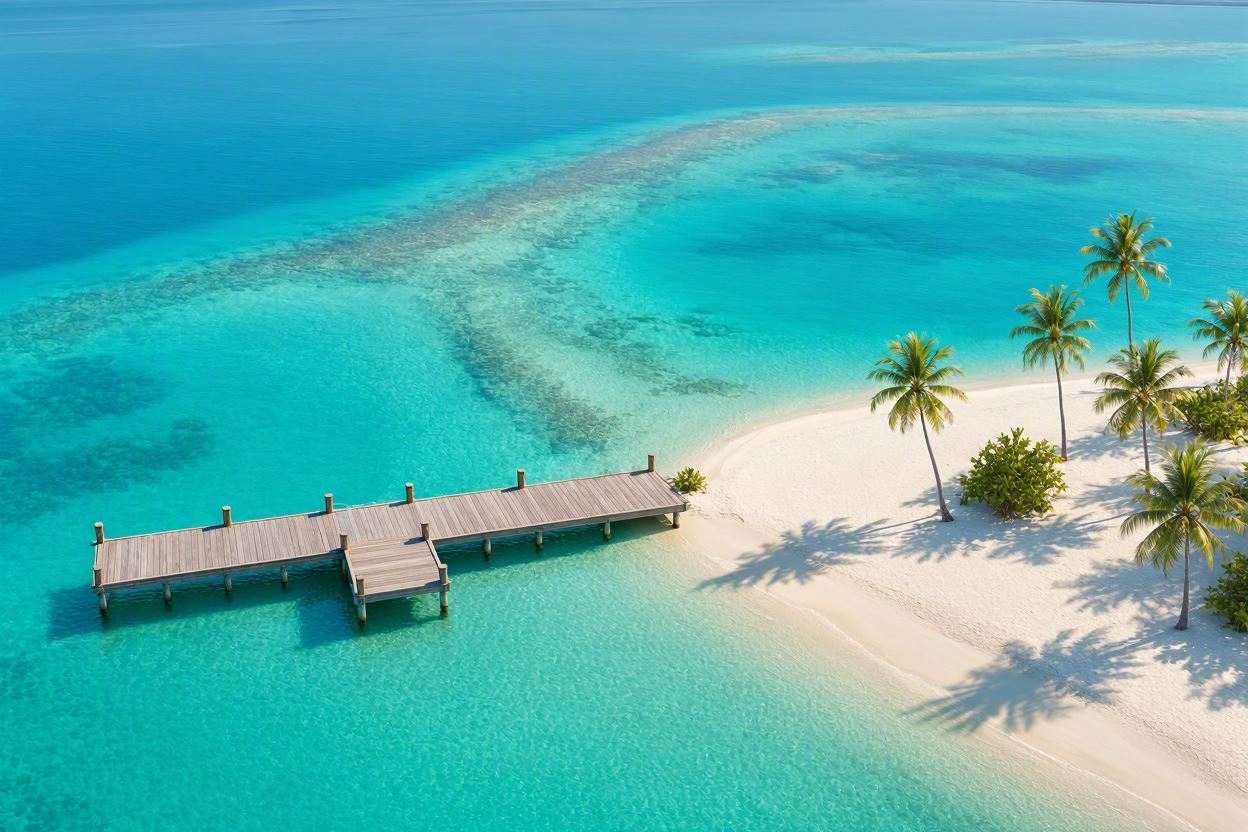
Lakshadweep and the Maldives get compared constantly, and for good reason. Both are coral-island escapes with the same impossibly turquoise water, white sand and the feeling of being very far from your inbox. But they're genuinely different trips, and which one is right for you depends on a handful of practical things more than the photos.
This guide compares them honestly, on the things that decide a trip: documents and permits, how you get there, what you'll stay in, what there is to do, the food, the season, how they feel, and the cost logic. We run packages to both, and we'll mention them only at the end.
The one-line difference
Lakshadweep is a quiet, simple, Indian island trip with very limited infrastructure. The Maldives is a polished, resort-led island trip with decades of luxury development behind it. Neither is better. They suit different people.
Documents and permits
This is where the two differ most in logistics, and it's changed recently, so read carefully.
Lakshadweep is Indian territory, so Indian citizens don't need a passport or visa, but they do need an entry permit. Published guides describe the permit as applied for online through the Lakshadweep administration's e-permit portal, with applications usually needed well ahead, at least about two weeks before travel, and with identity documents such as an Aadhaar card or passport, a photograph and a detailed itinerary. The same guides report that from April 2026 the process was simplified, with a local sponsor and a police clearance certificate no longer required, and permits valid for up to 30 days. Treat that as reported, and check the official portal, because permit rules for Lakshadweep have changed more than once. If you're booking an organised trip, the permit is normally arranged as part of it.
The Maldives needs a passport. According to published guides, Indian citizens receive a free 30-day visa on arrival, with a passport valid for at least a month and a blank page, a confirmed hotel booking, a confirmed flight out and proof of funds. Travellers must also complete an online traveller declaration shortly before departure, reported as within 96 hours before the flight. These details can change, so check an official source before you fly, and note that resorts and guesthouses typically add a per-night green tax, which should be shown on your booking.
If your passport isn't in order, or you're working to a tight timeline, Lakshadweep avoids the passport question, but not the permit lead time.
Getting there
Lakshadweep is reached by air or sea, and mostly from Kochi in Kerala. Agatti has an airport, and flights are limited in number, so a cancelled or delayed flight can change your whole plan. Ship journeys are longer and run on set schedules. Build buffer days into any Lakshadweep trip, and check current flight availability when you plan. Please note that, in our Lakshadweep package, flights to Agatti are not included, so you book them separately.
The Maldives has many more international connections into Malé, and from there you reach your resort by speedboat, seaplane or domestic flight, depending on where it is. Seaplane transfers operate in daylight, so a late arrival can mean an overnight stay in Malé before you reach your resort. Plan your arrival time with that in mind.
Where you stay
In the Maldives, the signature experience is the resort island: a single island with a single resort, with overwater villas, a house reef, spas, restaurants and a resort-only world. The result is polished, private and convenient, and also self-contained, since you rarely interact with local life. There's also a middle option, guesthouses on local inhabited islands, which are more affordable and more local, though they come with local rules, such as modest dress and limits on alcohol.
Lakshadweep has far less built up. A handful of islands are open to tourists, and accommodation is simpler and more limited, with small hotels and resorts. That's a genuine plus if you want an untouched, quiet island, and a drawback if five-star luxury is your priority.
What you'll do
Both are about water. In the Maldives, house reefs, snorkelling, diving, sandbank picnics, sunset cruises and dolphin trips are everyday offerings, and resorts have well-organised water sports. In Lakshadweep, expect lagoon walks, snorkelling, kayaking, glass-bottom boats and diving at certain islands, with a more basic, less commercial setup. If you've never snorkelled, either place is a lovely introduction, but check the swimming and safety instructions each time, and don't go into the water beyond your ability.
The food, honestly
Both are seafood-centred, and vegetarian and Jain food needs advance planning in each. In the Maldives, resort kitchens are generally used to dietary requests, and the key is to tell the resort early so they can prepare. On a resort with a fixed meal plan, ask what the vegetarian and Jain options will be. In Lakshadweep, food options on the islands are limited by nature, with local cuisine built around fish and coconut, so vegetarian and Jain meals have to be arranged with the hotel in advance, and you should expect simpler menus. Carry some dry snacks on either trip. Our guide to Jain and vegetarian food abroad covers how to ask.
Alcohol and rules
Lakshadweep is generally a dry destination, with alcohol restricted on most islands, and some islands have specific rules for visitors. The Maldives serves alcohol at resorts, but not on local islands. Both have customs and rules about modest dress away from resort areas, so check what applies to you.
Season
Both are best in the drier months, roughly from October or November to April or May, when the sea is calmer and the skies are clearer. The monsoon, roughly from June to September, brings rough seas, and many island activities and transport links can be disrupted, particularly in Lakshadweep. Treat this as general guidance, and check the forecast and your operator's advice closer to your dates.
Cost: the logic, not the number
We won't give figures, because prices shift, but the logic is helpful. Lakshadweep is generally the more budget-friendly of the two for a comparable trip length, particularly because there's no international flight, visa or green tax involved, though flights to Agatti are a separate cost. The Maldives can be booked at a range of price points, from guesthouses to ultra-luxury resorts, but its reputation for overwater villas and private islands usually puts the headline experiences at a higher price than most Lakshadweep options. In the Maldives, check what's included: meal plans, transfers and taxes make a big difference to the real price.
How each one feels
Lakshadweep feels like a quiet escape, with local life, slow days and few amenities. It rewards people who like simplicity and don't mind limited choice. The Maldives feels like a curated indulgence: spotless, private and designed so you never have to think. It rewards people who want to be looked after.
Which should you choose?
Pick Lakshadweep if you want a quieter, more affordable, all-Indian-logistics island trip, you're happy with simple accommodation and limited food choices, and you don't mind building in flexibility for flights and the weather.
Pick the Maldives if you want the overwater-villa experience with maximum resort infrastructure, a honeymoon or anniversary where luxury and privacy matter, and frequent flight connections.
Think twice about either if you need guaranteed nightlife, a long list of restaurants or an itinerary full of sightseeing, since neither is built for that.
Honeymooners, families and friends
For honeymooners, the Maldives is the classic, with Lakshadweep as a quieter, more modest alternative. For families, the Maldives resorts are easy and safe but can be costly, and Lakshadweep suits families who are comfortable with simple arrangements. For groups of friends, Lakshadweep's relaxed pace and lower cost suit a laid-back trip, while the Maldives suits groups happy to share a resort budget.
What four days actually look like
On a four-day Lakshadweep trip, the first day is mostly arrival: you land at Agatti, settle in and take an evening walk along the beach. The next two days are for the lagoon, with a slow morning, some snorkelling or a boat ride, a long lunch and a late-afternoon walk. The last day is for departure, with a transfer to the airport. It's quiet by design, and it works best if you want little to do.
On a four-day Maldives trip, day one is arrival and transfer to the resort, often by seaplane or speedboat, followed by a late afternoon settling into your villa. The following days revolve around the reef, the villa deck and the restaurants, with a snorkelling excursion and perhaps a private dinner on the beach. The last day is a morning at leisure and the transfer back to Malé. It's polished and effortless, with a lot of time and a lot of comfort.
Staying safe in the water
Both destinations involve a lot of time in and around the sea, so a few sensible habits matter. Listen to briefings from your hotel or guide, don't swim beyond your ability, wear a life jacket if you're not a confident swimmer, and avoid touching or standing on coral, which can injure you and damages the reef. Check conditions before going out, particularly in windy weather or near the edges of lagoons where currents can be strong. Protect yourself from the sun with reef-safe sunscreen, a hat and a rash vest, since the tropical sun is stronger than most people expect. If you have any medical condition, please speak to your doctor before you go, since that's advice we can't give.
What to pack
Light cotton clothing, swimwear, a rash vest or long-sleeved swim top, reef-safe sunscreen, a hat and sunglasses, and a dry bag for your phone and documents. Sandals or water shoes for walking on coral sand. Insect repellent. A basic first-aid kit and any regular medication. Dry snacks, which matter more in Lakshadweep, where choices are limited. And some cash, since card acceptance and ATMs can be limited on small islands, so check what to expect before you go.
Connectivity and switching off
In the Maldives, resorts generally offer Wi-Fi, though speeds and charges vary. In Lakshadweep, mobile and internet connectivity can be limited or patchy on some islands, so tell family and your office in advance that you may be hard to reach. For many travellers that's part of the appeal, and for others it's a reason to choose the Maldives instead. Decide which you'd prefer before you book.
When to book
Both are popular in the cooler season, particularly around the year-end holidays and long weekends, so book early. For Lakshadweep, remember the permit lead time and the limited flights, which can't be rushed. For the Maldives, the best villas at peak times can sell out months ahead, so plan sooner if you have a specific resort or date in mind.
How we handle both
We run packages to both. Our Lakshadweep Agatti Tour is four days and three nights on Agatti Island, with 3-star accommodation, breakfast, Agatti airport pick-up and drop and sightseeing, with lagoon views, beaches and optional water sports. Flights, lunch and dinner are not included, and we've confirmed vegetarian and Jain meal arrangements with local hotels in advance. Our Maldives Overwater Honeymoon is four days and three nights with return flights, an overwater villa, daily breakfast and dinner, seaplane or speedboat transfers, a snorkelling excursion and a private beach dinner, with resort kitchens briefed in advance for vegetarian and Jain meals.
Tell us your dates, who's travelling and roughly what you'd like to spend, and we'll tell you honestly which one fits, not just which looks better in photos. You can reach us on WhatsApp or through the contact form.
Sources & credits