Weather and seasonal patterns can shift. Seasonal guidance here reflects general, publicly available climate patterns — not a forecast for your specific travel dates. Please check an official, current weather forecast closer to your trip before finalising plans.
We've written this to help you plan a trip you'll genuinely love — not as professional guidance beyond travel planning. For anything outside travel planning — safety, technique, weather, or specialist advice — please lean on the right expert for it: a certified guide, a local authority, whoever fits best. When it comes to actually planning your trip, though, we're always just a message away — contact form, WhatsApp, call, or email — and we'd love to help you get there.
Kashmir doesn't really have one best season. It has four very different trips, depending on when you go, and the right one depends on what you're actually hoping to feel: blossoms and gardens, green meadows and open roads, gold and crimson autumn, or snow.
This guide walks through each season honestly, including what's less good about each, then covers the practical points that matter, such as what each part of the valley is for, what to pack, how food works for vegetarian and Jain travellers, and how to choose between the routes we offer. Our own packages come at the end.
Before anything else: check current conditions
Kashmir's travel conditions, including security, weather, road access and flight schedules, can change. Please check current advisories from official sources and local authorities close to your travel dates, and speak to your hotel or operator for on-the-ground updates. This guide covers seasons and scenery, and it isn't a safety assessment for any particular date.
Spring: March to May
Spring is when the valley wakes up. Almond blossoms come first, then the tulips. The Indira Gandhi Memorial Tulip Garden in Srinagar, one of Asia's largest tulip gardens, typically opens in spring and is usually at its best in April, though bloom timing depends on the weather that year. The Mughal gardens, such as Shalimar and Nishat, are green and fresh, and temperatures are mild.
What's good: gardens, photography, comfortable weather, thinner crowds than summer. What to know: weather can be changeable, with rain and cool evenings, and some higher-altitude roads and spots may still be closed or snowy early in the season. Tulip season is short and popular, so book accommodation early for April.
Summer: June to August
Summer is peak season, and for good reasons. Daytime temperatures are comfortable compared with the plains, all the major roads and passes tend to be open, and the days are long. Sonamarg and other higher destinations, which can be snowed in at other times, are accessible. Pahalgam's valleys are green, and Gulmarg's meadows are lush.
What's good: access to nearly everywhere, comfortable days, a lively feel. What to know: it's the busiest and priciest period, and Gulmarg in summer is green meadows, not snow, which surprises people expecting snow all year. Pack for cool evenings, and for the occasional rain shower.
Autumn: September to November
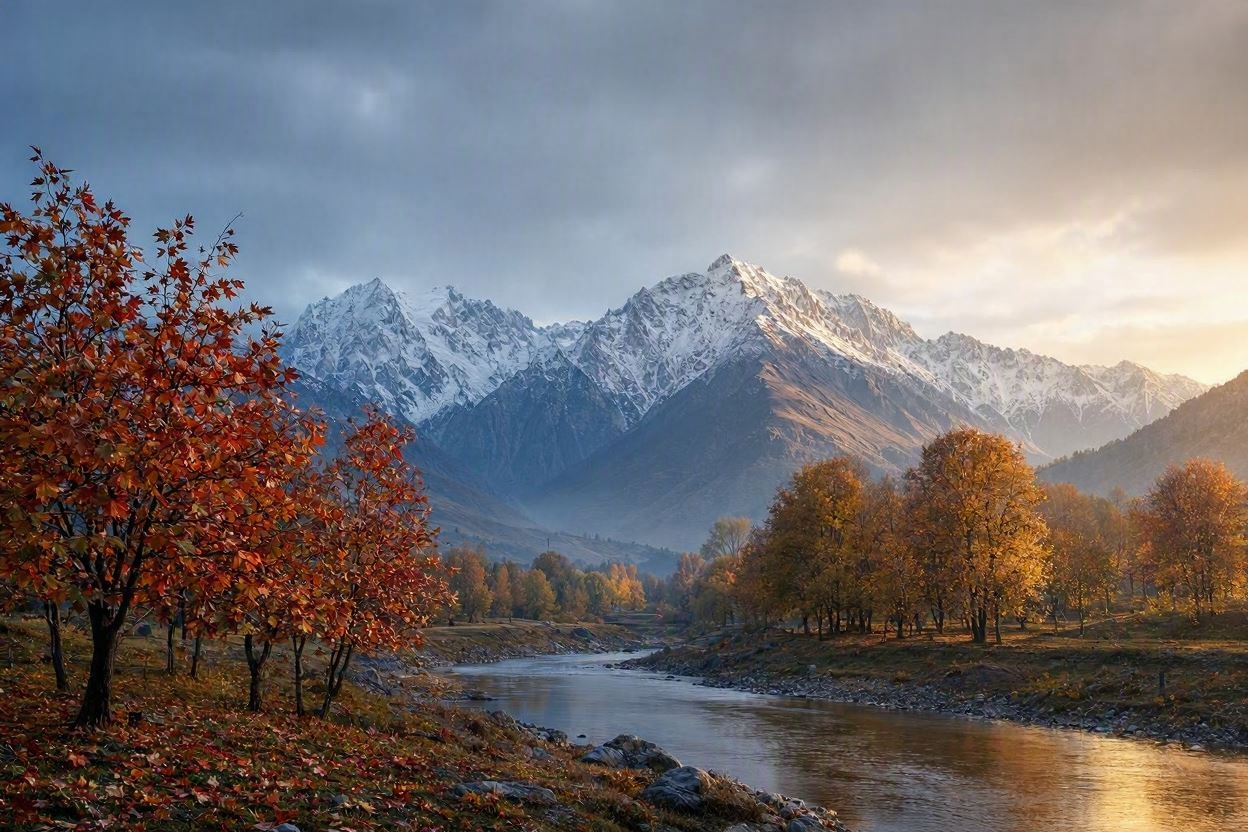
For many repeat visitors, autumn is the quiet favourite. The chinar trees turn deep gold and red, especially through October, the light is soft and golden, and crowds thin out after summer. Days are still comfortable, with cool mornings and evenings that get colder as November nears. It's also apple harvest season in the orchards around Srinagar and Sopore and other parts of the valley.
What's good: colour, light, orchards, fewer crowds, a calm feel. What to know: it gets properly cold at night as the season progresses, so pack layers, and by late November winter is close. If your interest is orchards and slower travel, autumn is the time.
Winter: December to February
Winter is Kashmir's snow season. Gulmarg becomes a skiing and snowboarding destination, with its gondola running through snowfields, and Srinagar gets a quiet, atmospheric dusting of snow on some days. The classic snow-covered Kashmir image is real in winter, not aspirational, and hotel rates tend to drop.
What's good: snow, atmosphere, value, a very different mood. What to know: it's cold, sometimes very cold, and some higher routes and activities can close because of snow. Flights and road travel can be affected by weather, so build in flexibility. And if you're not comfortable in cold weather, think carefully before choosing it.
Which season for whom?
For couples who want romance and gardens, spring or autumn. For families with children who want easy weather and open roads, late spring or summer. For photographers, autumn for colour and spring for blossoms. For snow lovers and first-time snow experiences, winter, with warm clothing and flexibility. For people wanting quiet and value, autumn and, for those who like cold, winter.
What each place is for
Srinagar and Dal Lake are the heart of most itineraries: shikara rides, houseboats, the old city, Mughal gardens and markets. A night on a houseboat is a distinctive experience, though comfort levels vary a great deal between boats, so choose carefully.
Gulmarg is known for its meadows, its gondola ride and, in winter, skiing. Gondola operation depends on weather, so don't plan your whole trip around a single day. Pahalgam is a pastoral valley of pine forests, rivers and a quieter pace, popular for relaxed days. Sonamarg, accessible mainly in the warmer months, is known for its high-altitude meadows and glacier views.
How many days?
Five to six days covers the classic circuit of Srinagar, Gulmarg and Pahalgam at a comfortable pace. Fewer than that turns the trip into a road journey. If you'd like Sonamarg or a slower rhythm, add a day or two.
What to pack
Layers are the answer in every season: Kashmir's temperatures swing between day and night. In winter, thermals, insulated jackets, gloves, hats and waterproof boots. In summer, light clothing plus a warm layer and a rain jacket. In spring and autumn, a mix, with a proper jacket for evenings. Comfortable walking shoes, sun protection and any regular medication. If you plan to ride the gondola or visit high altitude areas, remember that conditions at the top can be much colder and windier than in town.
Food: vegetarian and Jain travellers
Kashmiri cuisine can be meat-forward, with famous dishes like wazwan built around mutton. But there are vegetarian dishes too, such as dum aloo, nadru (lotus stem) preparations and various vegetable curries, along with kahwa, the fragrant saffron tea. Arrangements for strict vegetarian or Jain meals need coordination with hotels and houseboats in advance, which is a large part of what we do on our routes. Our guide to Jain and vegetarian food abroad explains how to ask for what you need, and many of the principles apply in India too.
Houseboat or hotel?
A night on a Dal Lake houseboat is one of the most distinctive things you can do in Kashmir: carved wood interiors, shikara rides at sunrise, tea on the deck. It's also very variable. Houseboats range from beautifully kept to tired, and they can be cold in winter and noisy near the busier parts of the lake. Our advice is to do one or two nights on a houseboat as an experience, and to stay in a good hotel for the rest, particularly in winter. Ask for specifics about heating, bathrooms, food and the location of the boat before you commit.
Travelling with children and older parents
Kashmir works well for families, with a few considerations. Altitude is modest in Srinagar but higher in Gulmarg and Sonamarg, and cold air can be tough on very young children and older people, so layers matter. Road journeys through hills can be long and winding, which affects anyone prone to motion sickness. Gulmarg's gondola involves queues and cold at the top. And pace matters: a relaxed schedule with a free afternoon is often better than a packed day. If anyone in your group has a medical condition, please speak to your doctor before you go, since that's beyond what we can advise on.
A day that works
A good Kashmir day is unhurried. Start with breakfast at the hotel or houseboat, take your main outing in the morning while the light is soft and the roads are quieter, return for a long lunch, and leave the late afternoon for a shikara ride, a garden walk or simply sitting with a cup of kahwa as the light changes. Evenings are early and cold for much of the year, so dinner and conversation suit the mood. The trap is trying to fit a long drive and three sights into the same day.
Shopping, honestly
Kashmir is famous for shawls, carpets, saffron, dry fruit, walnut wood carving and handicrafts. It's also a place where tourists are sometimes sold imitations at inflated prices. If you're buying something expensive, such as a pashmina shawl or a carpet, ask about authenticity and certification, compare prices at more than one shop, and be wary of anyone who pushes you quickly. Buying from reputable, established shops, or through your hotel's trusted contacts, is safer. Dry fruit and saffron are easier to buy but quality varies, so ask to taste and check packaging.
Photography, light and timing
The valley is a photographer's gift in every season, but light is the thing to plan around. Early mornings on Dal Lake, with mist on the water, are among the most atmospheric. Autumn light on chinar leaves is soft and warm in the late afternoon. In winter, snow reflects light brightly and can fool your camera's exposure, so check your pictures. In spring, gardens look best in the morning before crowds arrive. Keep phones and cameras warm in cold weather, since batteries drain quickly.
Travelling respectfully
Kashmir is home to people with their own culture, faith and way of life, and many depend on tourism. Dress modestly at religious sites, ask before photographing people, bargain fairly and kindly, and avoid leaving litter at meadows and viewpoints. Choosing local guides, drivers and shopkeepers helps ensure that your trip benefits the people who live there.
When to book
Spring tulip weeks, summer and the autumn peak are the busiest times, so book hotels and houseboats early, ideally a couple of months ahead. Winter has more availability but plan flights and transfers carefully because weather can cause delays. If you're flexible about dates, a quieter week within a season often gives a better experience for a lower price.
A note on flexibility
In any season, Kashmir rewards a loose plan. Weather can change gondola operations, close a pass or delay a flight, and a day with nothing fixed gives you room to adapt. Travellers who go with a sense of curiosity, rather than a rigid checklist, tend to come home happiest.
Common mistakes
Assuming Gulmarg has snow all year. Expecting tulips outside the short spring window. Not allowing flexibility for weather in winter. Skipping layers. Cramming too much into too few days. And booking a houseboat without checking what it's actually like.
How we approach Kashmir
We run two Kashmir routes, depending on the season and pace you want. Our Kashmir Valley Escape is the classic: six days and five nights, with a Dal Lake houseboat stay, Gulmarg's gondola (weather permitting), a Pahalgam valley day trip and the old city of Srinagar, with hotel and houseboat stays, daily breakfast, 100% veg dining and local transfers. Our Apple Trails of Kashmir is the slower, orchard-season route: six days and five nights with three nights in Srinagar, one in Gulmarg and one in Pahalgam, a complimentary shikara ride, apple juice and Kashmiri kahwa, with dinner and breakfast included.
Tell us roughly when you're thinking of travelling and who's coming, and we'll tell you honestly which one fits. You can reach us on WhatsApp or through the contact form.
Sources & credits