Weather and seasonal patterns can shift. Seasonal guidance here reflects general, publicly available climate patterns — not a forecast for your specific travel dates. Please check an official, current weather forecast closer to your trip before finalising plans.
Visa and entry rules change — always verify current requirements. Visa, permit, and entry requirements are set by the relevant government and can change without much notice. The information here is a general starting point, not official guidance. Please confirm current requirements with the official embassy, consulate, or e-visa portal for your destination before you travel — we're also happy to help you check this as part of planning your trip with us.
Ask ten people who've been to Bali when to go, and most will give you the same flat answer: dry season. That's true, but it skips the decision you're really trying to make. Do you want near-guaranteed sunshine and higher prices, or slightly less certainty and noticeably more room to breathe? And what about the wet months everyone warns you off? Are they really that bad?
This guide breaks the year down honestly, month by month and region by region, and then covers the practical things Indian travellers need to know before booking: the visa, the tourist levy, food, and what to expect from each part of the island. We'll talk about our own Bali routes only at the very end.
The short version
Bali sits just south of the equator, so it doesn't have four seasons. It has a dry season and a wet season. The dry season runs roughly from April to October, and the wet season from November to March. Within those two, there are quieter edges and busier peaks, and that's where most of the planning decision lives.
June to August: peak dry season
This is when Bali's weather does exactly what the postcards promise, with long, clear days and very little rain. It's also peak season for crowds and prices. Ubud's rice-terrace paths get genuinely busy, beach clubs in Seminyak fill up early, and hotel rates climb to match demand. Traffic in the south of the island can be heavy, and a short drive can take much longer than the map suggests.
If your dates are fixed by school holidays or a festival, this is probably your window regardless. If they're not, it's worth knowing what you're trading for that reliability. Book flights and villas well ahead, and plan sightseeing early in the morning to beat both the crowds and the heat.
April, May, September and October: the sweet spot
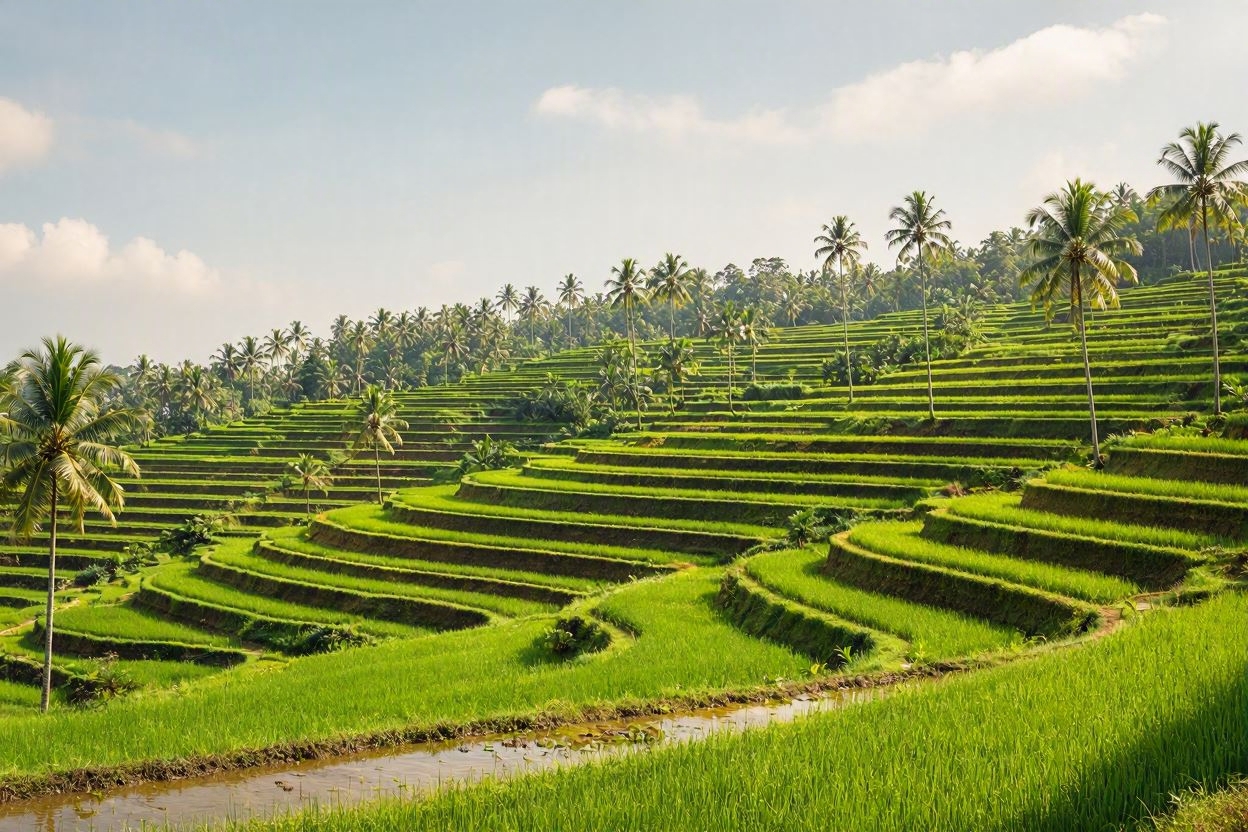
These are the quieter edges of the same dry stretch. The weather is similar to peak season in most years, with thinner crowds and often better rates. This is less of a compromise than people assume: the difference in rainfall between July and September is small enough that it rarely changes an itinerary, while the difference in how crowded Tegalalang's rice terraces feel is not small at all.
If we were choosing for a first-time couple without fixed dates, this is the window we'd point to. Weather is never guaranteed anywhere, but the odds are good and the island feels easier.
November to March: the wet season, honestly assessed
The wet season gets dismissed more than it deserves. Rain in Bali typically arrives in heavy bursts, often in the afternoon or evening, rather than settling in for days, though there are certainly wetter spells, particularly in the middle of the season. What you get in exchange is Bali at its greenest, lower prices on flights and hotels, and temples and viewpoints that don't need a sunrise start to avoid the crowds.
The downsides are real, too. Some days will be properly grey and wet, outdoor plans may need changing, the sea can be rougher, and humidity is high. If you're planning a beach-centred trip, or a short trip where one rained-out day is a big proportion of it, the wet season is riskier. If you're going for villas, spas, cooking classes, temples and slow mornings, it's perfectly workable, and many repeat visitors prefer it.
Please note that weather patterns vary from year to year, so treat all of this as general guidance, not a forecast.
A month-by-month feel
January and February tend to be among the wetter months, with lush scenery and low prices. March can still be wet but is often a transition to drier weather. April and May usually bring drier, sunnier days and moderate crowds. June to August is the main dry season peak. September is often an excellent month, dry with fewer people. October can be pleasant, though rain may start returning towards its end. November and December see the rains settle in, with the festive season pushing prices up again around Christmas and New Year.
Where you stay matters as much as when
Bali's regions differ a lot, and the "best time" depends on where you're spending your days.
Ubud, in the island's interior, is the cultural heart, with rice terraces, temples, art and cooking classes. It's cooler than the coast and doesn't depend on beach weather, which makes it a good base in the wet season.
Seminyak, Canggu and the south-west coast are known for beach clubs, restaurants and sunsets, and they suit couples and friends who want energy and nightlife. Beach days depend more on the weather here.
Uluwatu and the Bukit peninsula in the south have dramatic cliffs, beaches and surf, and they're at their best in the dry season.
Nusa Penida and the smaller islands are popular day trips or overnight stays, but the sea crossing can be rough in bad weather, and boat services can be disrupted, so allow flexibility.
Festivals and local rhythms
Bali is a Hindu island, and its ceremonies are part of daily life. You'll see offerings on pavements, processions on the roads and temple festivals on many days. Nyepi, the Day of Silence, is a major event when the whole island shuts down for 24 hours, including the airport, and visitors are expected to stay inside their accommodation. Dates change each year, so check the calendar before booking if you're travelling in the spring. Galungan and Kuningan, major festivals, can also affect timings and bring a festive atmosphere.
Respecting local customs matters: dress modestly at temples, don't step on offerings, and follow the guidance on signs.
The practical stuff for Indian travellers
Indian passport holders generally need a visa to enter Indonesia. According to published guides, many Indian travellers use the Visa on Arrival, reported at about 500,000 Indonesian rupiah for a stay of up to 30 days, extendable once for another 30, and some apply online beforehand through the official immigration website to avoid airport queues. Bali also charges a separate tourist levy, reported at about 150,000 rupiah per visitor, which can be paid online or on arrival. You'll normally need a passport with at least six months of validity, blank pages, an onward ticket and an address for your stay.
These figures and procedures change from time to time, so please check the official Indonesian immigration website before you fly. We're happy to confirm the current requirement for your dates as part of planning.
Food for vegetarian and Jain travellers
Bali's food scene leans heavily non-vegetarian in local eateries, and shrimp paste and shared frying oil are common in traditional cooking. The good news is that Ubud and many tourist areas have a large number of vegetarian and vegan cafés, and tofu and tempeh are staples. If you're strictly vegetarian or Jain, it takes more planning in smaller, local places. Our guide to Jain and vegetarian food abroad explains how to ask and what to watch for.
Getting around
Bali has no extensive public transport network, so most visitors rely on private drivers, taxis or ride-hailing, and some hire scooters. We'd suggest caution with scooters unless you're an experienced rider and have the right licence and insurance, because accidents involving tourists are common. A private driver for a day is often affordable and takes much of the stress out of the roads, particularly in traffic.
How many days do you really need?
Because of the distances and traffic, Bali rewards a slower pace. Three days gives you a taste: a night or two in Ubud, an afternoon at the coast, and not much else. Five days lets you separate the island's two moods, the cultural interior and the beach south, without feeling hurried. Seven days or more allows a third base, such as Uluwatu or a day trip to Nusa Penida, and lets you build in a rest day. Each time you change hotels, you lose half a day to packing and driving, so fewer bases usually means a better trip.
What to do when it rains
Even in the dry season, an odd shower can appear, and in the wet season you'll want a few indoor options. Cooking classes, spa sessions, temple visits with a raincoat, coffee plantation tours and long café lunches all work well when the weather turns. In Ubud especially, the rain makes the greenery more vivid, and many travellers say a wet afternoon on a villa terrace is among their favourite memories. Build slack into the schedule, and avoid stacking your must-do items on a single day.
Staying healthy and comfortable
Bali is hot and humid for most of the year, so sun protection, a hat and plenty of water are sensible every month. Mosquito-borne illnesses are present in parts of Indonesia, so insect repellent is worth carrying, and it's wise to speak to your doctor or a travel clinic before you go if you have any health concerns, since we can't offer medical advice. Be careful with ice and tap water in small local places, drink bottled or properly treated water, and take any regular medication with you in your hand luggage. And buy travel insurance, which our packages include where stated.
When to book
For peak months, such as July, August and the Christmas and New Year period, book flights and villas two to three months ahead if you can. For shoulder months, you'll often find good options a few weeks out, but the best villas still sell out. If you're flexible, watching for fares and hotel rates a few months ahead can save a noticeable amount.
A small note on money
Carry some Indonesian rupiah in small notes for tips, parking, small shops and offerings, and use cards where they're accepted, noting any foreign transaction fees. Avoid exchanging money at unofficial counters with unusually good rates, since short-changing is a known issue. Check with your bank about international card use before you leave.
Common mistakes
Underestimating travel times between regions. Booking too many bases in too few days. Planning a beach-focused trip in peak wet season. Overlooking the visa and levy until the last minute. And trying to do everything: Ubud, the south, Uluwatu and Nusa Penida in four days leaves you in a car for most of it.
How we approach Bali
We build Bali itineraries around the season and the priorities you actually have, not just the generic "go in dry season" advice. If you want a slow, private trip, our Bali Honeymoon Escape is five days and four nights with villa stays, an Ubud rice terrace and temple day, a beach afternoon in Seminyak and a couples spa session, with return flights, breakfast, airport transfers and travel insurance included. If you have less time or a tighter budget, the Bali Quick Explorer condenses Ubud and Seminyak into three days and two nights. Both routes have the dining pre-vetted for genuine vegetarian and Jain-friendly options.
Tell us roughly when you're thinking of going and who's travelling, and we'll tell you honestly which season and route fits. You can reach us on WhatsApp or through the contact form.
Sources & credits